


Driven to Serve highlights the veterans and military-connected employees who build successful careers at GM with purpose and impact.
Some people build confidence through comfort. Brett Munster built his through responsibility.
At 18, he entered the U.S. Marine Corps, stepping into a world where readiness wasn’t optional and pressure was constant.
That early experience — briefing senior officers, overseeing mission-essential equipment, and mentoring young Marines — shaped a mindset rooted in accountability.
Now, at General Motors, that same mindset protects something different but equally critical: uninterrupted production.
As an Intercontinental Operations Logistics Coordinator, Brett monitors material flow from the Asia Pacific region to keep assembly and propulsion plants running. His story proves that while the uniform may change, the mission-first mentality does not.
How does confidence built in the Marines carry into global operations at GM? Dive into Brett’s story below.
What inspired you to join the U.S. Marine Corps?
I didn’t see myself sitting in a classroom after high school doing homework. I wanted to do something completely different from the norm. I knew I wanted to join the military, and if I was going to do it, I wanted to be with the best…so I chose the Marines.
I remember the day I told my family. My mom was sad. My dad was proud, but sad for my mom. They were both worried, of course. But more than anything, they were proud of me.
The Marine recruiters were very honest and up front. They told me it wouldn’t be sunshine and rainbows. It would be tough. But they were real about what I’d gain from it: discipline, purpose, growth. That stuck with me.
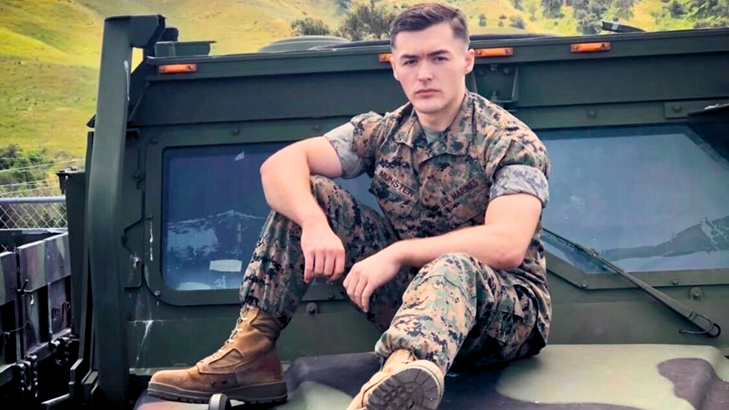
Brett takes a breather at Camp Pendleton, CA at the 11th Marine Regiment Motor Pool where all vehicles are stored and maintained in 2019.
Was there a time in the Marines that tested you and ultimately shaped who you became as a leader?
One moment I’ll never forget was being a 19-year-old Private First Class (PFC) and having to brief a Lieutenant Colonel on our unit’s maintenance readiness.
My role as a Maintenance Management Specialist (MMS) was to ensure our artillery unit maintained full mission readiness. That meant tracking vehicles, overseeing parts inventory, ensuring paperwork and procedures were accurate, and confirming our Marines were following safety standards. This included proper use of personal protective equipment (PPE).
One day, both my Staff Sergeant and Lieutenant stepped out of a high-level meeting. There were only three of us in that role, so in their absence, it was my duty to brief the Battalion Commander.
I was only two months into the job. I felt nervous. I had never spoken in a setting like that. But I stood up and delivered the breakdown of which vehicles were operational, and what we needed for upcoming exercises.
I don’t remember everything I said. I just remember deciding to speak with conviction. And it went fine.
That moment taught me something important: if you know your material and take ownership of it, you can stand in any room.
How did your deployment with the 31st Marine Expeditionary Unit shape your confidence?
Deployment forced me to grow up quickly.
At the time, I was the only MMS from my unit who was deployed. I didn’t have my Lieutenant or Staff Sergeant next to me. I had to communicate directly with both senior non-commissioned officers and officers about maintenance readiness and critical parts.
That experience taught me that confidence isn’t loud. It’s about being able to make decisions, solve problems and stand by them even when you’re uncomfortable.
We’d say, “Throw me to the wolves.” That’s how you learn.
As a Sergeant, what did leadership mean to you?
Everything.
When I became a Sergeant, my top priority was taking care of my Marines. Whether they planned to reenlist or transition out after one contract…that didn’t matter. My responsibility was to make sure they had what they needed to succeed.
On deployment, I taught Corporals Course classes to Marines from multiple units — artillery, motor-t, and even infantry personnel. It opened my perspective. I learned from them just as much as they learned from me. Everyone has a piece that fits into the bigger puzzle.
Leadership isn’t about rank. It’s about helping people grow and staying open to learning more from others no matter what position you hold. Readiness only happens when the entire system works together.
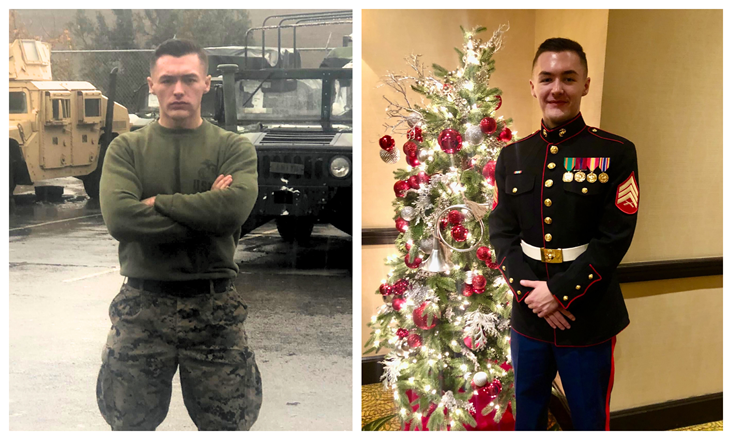
Left: Brett tackles the Integrated Training Exercise (ITX) head-on at Twentynine Palms, CA in 2017. Right: Brett celebrates at the 244th Marine Corps Birthday Ball in 2019.
How did you approach your transition out of the Marines?
The first month after leaving the Marines felt like a blur. I was suddenly out of a routine I’d had for four years.
Needless to say, it was a big adjustment.
I was fortunate. My family and friends supported me. My college had a strong veteran support office that helped with everything from navigating the GI Bill to connecting with resources. I felt supported and encouraged.
But what I really learned was to take it one day at a time. You have to be comfortable being uncomfortable for a little while. That’s normal.
For veterans transitioning now, my advice is simple: stay persistent. Keep showing up. Keep applying. Keep pushing forward. What you learned in the military absolutely carries over, even if you don’t see it right away.
What drew you toward logistics and operations?
During deployment, I dealt heavily with logistics — delayed shipments, incorrect paperwork, transportation issues, and coordination with civilian contractors overseas.
I realized I was good at managing chaos. I liked solving those kinds of problems.
Automotive runs deep in my family on both my mom’s and dad’s sides, so following this path felt like a natural fit for me.
What made GM feel like a place to belong?
I started as a contractor supporting GM’s account. The leaders and teammates I met were some of the best I’ve worked with. They mentored me, supported me and pushed me to grow.
It felt like a place I could build a long-term career.
What feels most meaningful about your work at GM today?
In my current role, I oversee Intercontinental Logistics from the Asia Pacific region. My focus is preventing production impacts at assembly and propulsion plants.
When material flow is disrupted, consequences can escalate quickly. Plants can stop producing. People can be sent home. The financial impact can ripple across the business.
My job is to recognize issues early, act fast, and drive them to resolution.
Knowing that our work protects thousands of jobs and keeps production moving — that’s meaningful to me.
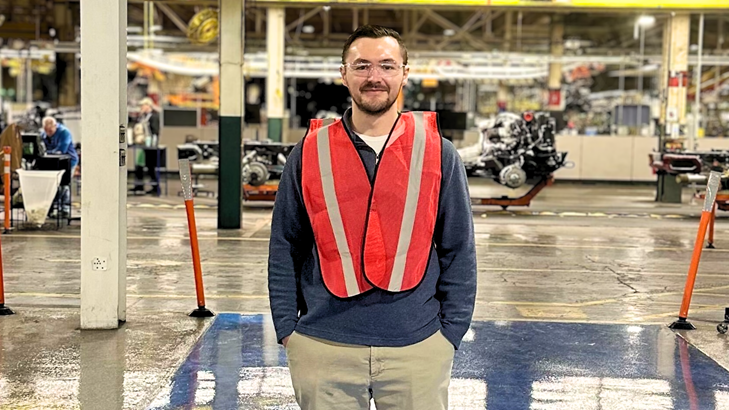
Brett takes a tour of the Command Center with GM’s Flint Assembly Plant in 2024.
Is there a moment at GM that mirrors your Marine Corps briefing experience?
Absolutely.
While working in the Assembly Command Center, we faced a potential supplier constraint that could have shut down an assembly plant for a week.
I had to build a simulation and mitigation plan, then present it to multiple directors and supervisors. I walked them through options A, B and C and outlined how we could prevent a shutdown.
I was nervous, much like when I briefed the Lieutenant Colonel all those years before.
But I trusted the data. I trusted my preparation. And I trusted myself. The plan worked, and we avoided the impact.
It was the same principle as back then: stay calm, know your material, and take ownership.
How does the mindset of service show up in your work at GM?
At the end of the day, we have one mission: keep the plant running.
There’s a new problem every day. Some are familiar. Some are completely new. But the approach stays the same: identify the issue, take ownership, and move with urgency. Don’t let small problems become large ones.
That mission-first mindset never left me.
What accomplishment from your military service stands beside your work at GM?
Receiving the Navy and Marine Corps Achievement Medal during my time with the 31st Marine Expeditionary Unit (MEU) is something I’m very proud of.
Our artillery battery’s vehicles had been in service for decades. Keeping them fully operational required coordination, persistence, and teamwork across multiple bases in Okinawa. I made sure that when we needed them, we were prepared and ready to go.
At GM, being part of a supplier crisis task force that impacted more than 50 suppliers and nearly every assembly plant stands beside that. Our team worked long hours and weekends, but we prevented any facility from being impacted.
In both cases, being prepared and leading as one team made the difference.
Why do you love working at GM every day?
It’s my team, 100%.
A lot of veterans miss the sense of belonging after leaving the military. They miss being part of something bigger than themselves.
With my team, I don’t feel that loss. There’s always a new challenge, but we handle it together. I learn something new almost every day.
It feels like being back in action — just in a different uniform.
Final question: what advice do you have about confidence?
Confidence is a mindset.
If you’ve prepared and you know your material, trust yourself. Don’t hesitate. Don’t doubt yourself. And practice, practice, practice.
When I started presenting more often, my fiancée helped coach me through it. Confidence isn’t something you’re born with, it’s something you build.
Just go for it.
Discover more about how veterans and military-connected employees at GM turn service into impact.


