


When John McDougall first rode Test Track as a kid, it opened his eyes to what the future of mobility could be.
That early spark led him to pursue automotive design — and ultimately to join GM.
Today, John has come full circle. As Manager of Product and Mobility on the GM Industrial Design team, he collaborated with Walt Disney Imagineering to help reimagine Test Track presented by General Motors at EPCOT.
This immersive new update brings a new sense of wonder to an iconic attraction where GM innovation meets Disney storytelling to give guests a bold new vision for the future of transportation.
For John, this is more than just a project: it’s the chance to inspire next-gen designers the way the original Test Track inspired him.
Find out what John has to say in this behind-the-scenes look at how the reimagined Test Track came to life.
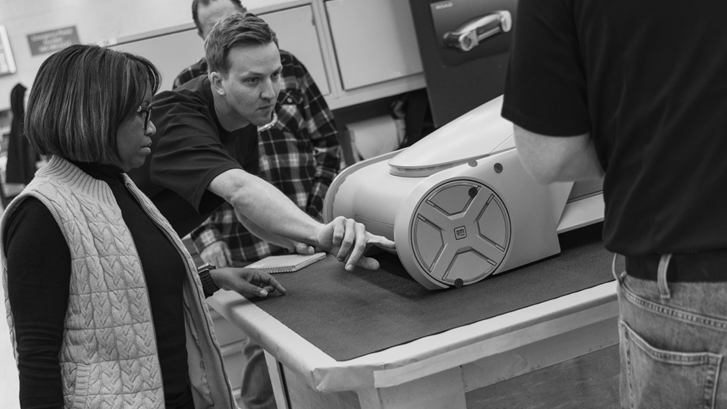
GM Industrial Design Manager John McDougall works with team members on an early vehicle design study for Test Track.
What was the most rewarding part of working with Walt Disney Imagineering on this attraction?
Seeing the kids standing in line, looking at our designs with big smiles. You can feel that spark of inspiration happening for them, the same one I felt when I was a kid.
I was about 10 years old when I went to EPCOT for the first time. Riding the original Test Track made a lasting impression on me. Helping create that spark for a new generation means a lot.
What was the collaboration with Walt Disney Imagineering like, and how did you make sure the experience still reflected GM’s identity?
It started with honoring GM’s history of innovation, while looking ahead toward the future. We wanted to evolve that vision and keep it true to both brands.
GM and Disney together equally shaped the story arc, so it felt both futuristic and grounded in real automotive innovation.
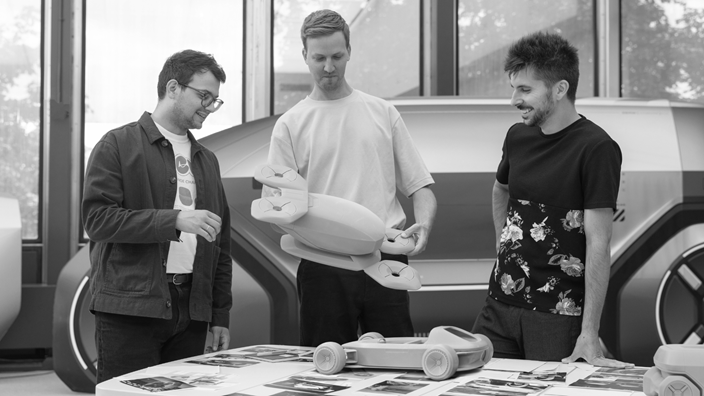
John McDougall and GM Design team members collaborate on early design details for reimagined Test Track at EPCOT.
How does Test Track presented by General Motors take guests on that emotional journey?
When we approached the reimagined Test Track at EPCOT, we really tried to think about it as one continuous emotional journey, not just a ride.
For me, it starts the moment you walk up. There’s this sense of anticipation before you even step inside. Then in the queue, you move through this timeline of incredible concept vehicles from General Motors. You see the futuristic dream cars, the early experimental studies, the big swings that imagined totally new ways of moving through the world. It’s reflective, but it’s not meant to feel nostalgic. It’s meant to spark curiosity. If we’ve been imagining like this for over a century, what could be next?
By the time you board, it shifts from looking at innovation to feeling part of it. Through projection and layered media, you start to see yourself integrated into the vehicles and environments of the future. That moment was important to me. The future shouldn’t feel distant. It should feel personal.
I love that arc. You begin by reflecting on a century of bold ideas, you see yourself in what’s coming next, and then you literally accelerate into it. That’s the emotional journey we wanted to create.
What role did GM play in shaping the futuristic imagery?
We designed the four concept cars guests are projected into, as well as the flying vehicle featured in the big futuristic “Progress City” finale, which is projected in an immersive dome.
It was a very collaborative process, but Disney gave us a blank canvas to create a vision, and then we collaborated to refine color, texture and details to ensure the vehicles would come to life in the ride as we imagined.
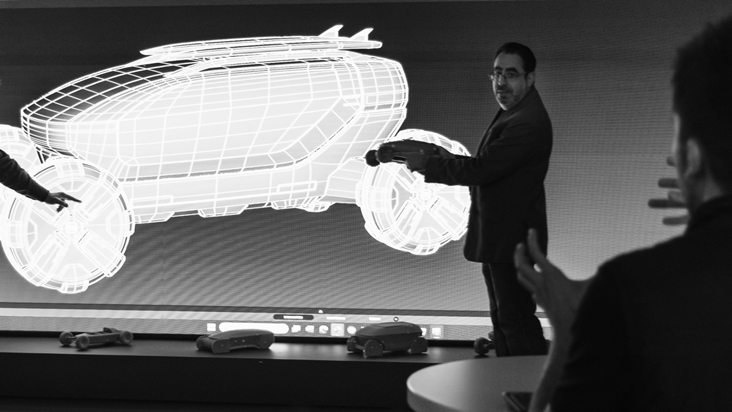
Digital vehicle concepts helped GM Design shape the ideas guests experience during the Test Track development process.
What about the queue experience?
For the queue, we were able to bring together ideas from Imagineers, along with GM’s Architecture, Marketing and Product teams to create a space that celebrates our past while building excitement about what’s next.
We went deep into the archives, dug through decades of designs, and were able to feature everything from the Astro III to early autonomy platforms that predicted today’s EV architectures.
From there, guests will see a look into the future, culminating with a preview of the vehicle concepts they’ll get to experience on the ride itself.
Where did the Walt Disney Imagineering team really take the lead?
Imagineers brought the storytelling and technical magic to bring our collective vision to life. It was a joy to see how they used technology and practical effects to create an immersive experience.
How has the GM–Disney relationship evolved for this update?
A lot has changed since the World of Motion attraction first opened in 1982.
Mobility has evolved, technology has evolved, and our storytelling tools have evolved too.
For reimagined Test Track, both of our teams brought decades of innovation to the table. Walt Disney Imagineering introduced cutting-edge effects — like new LED techniques to visualize LiDAR, the projection technology that lets guests see themselves inside our vehicles, and lighting effects that weren’t possible before.
For the “Garage of the Future” scene, we worked with Imagineers to re-imagine a special effect that they call “Pepper’s Ghost” where you see yourself inside a projected image. This type of effect has been used by Disney going back all the way to the original Haunted Mansion ride, but we brought it into the future with levels of detail and projections that push the realism and immersive experience like never before.
It truly reflects how far both companies have come throughout this journey together.
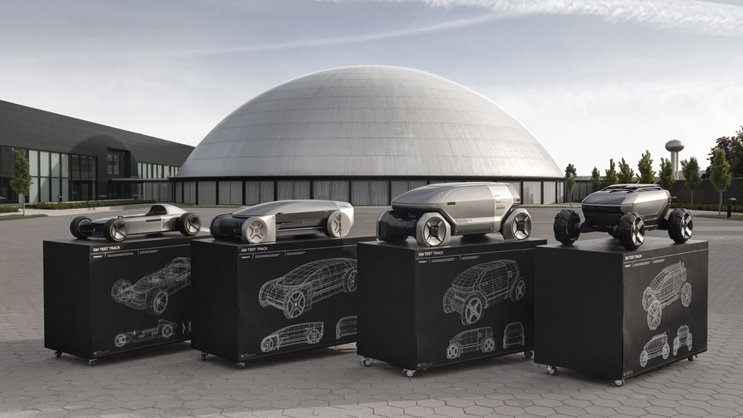
Scale models created during the design of Test Track are displayed outside GM’s Design Dome in Warren, Michigan.
What did you enjoy most about bringing GM’s industry experience into this attraction?
Two moments stand out.
First, the “Garage of the Future” scene. Disney gave us complete freedom to imagine what tomorrow’s vehicles can be — from next-generation cruisers to advanced adventure vehicles. Seeing those concepts come to life through the projection system is incredible.
Second: the LiDAR room.
You enter a space that feels like you’re outdoors. The lights drop, and all of sudden, you see the world the way LiDAR sees it.
Taking complex technology and making it intuitive and understandable is a great example of the innovation that happens in GM vehicles today that customers may not fully comprehend yet.
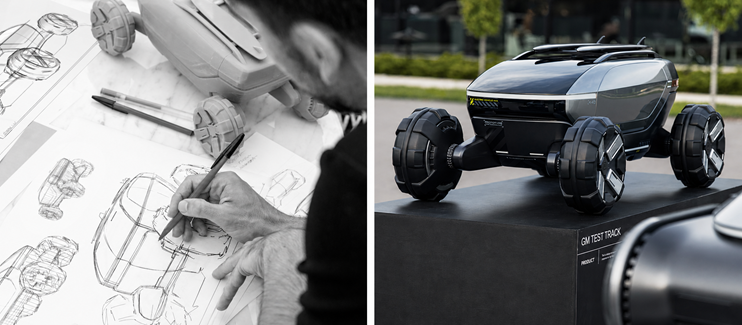
With sketches and scale models, GM Design helped develop the future-facing vehicle concepts in Test Track.
How do you design something futuristic but still emotionally familiar?
By anchoring it in the familiar, or in the “now”. Each vehicle concept you see in Test Track is based on what currently exists.
The road concept is a look at the highway cruiser of tomorrow, the Race concept builds on the innovation of motorsports, the Utility and Adventure concepts take today’s capability to a whole new level.
Each design feels connected to today, while pushing just far enough to spark curiosity about tomorrow.
How long did this process take?
We went from the first sketches to the first ride at EPCOT in less than two years. Along the way we had multiple trips to collaborate with Imagineers, prototyping every detail.
The process brought together our team of vehicle designers, architects, and graphic designers, along with the creative minds at Disney to consider the full experience and all the little moments of joy throughout the attraction. The passion from everyone on the team is something you can feel in the attention to detail at every step of the experience, and all the magic moments that will leave you thinking, “how did they do that?”
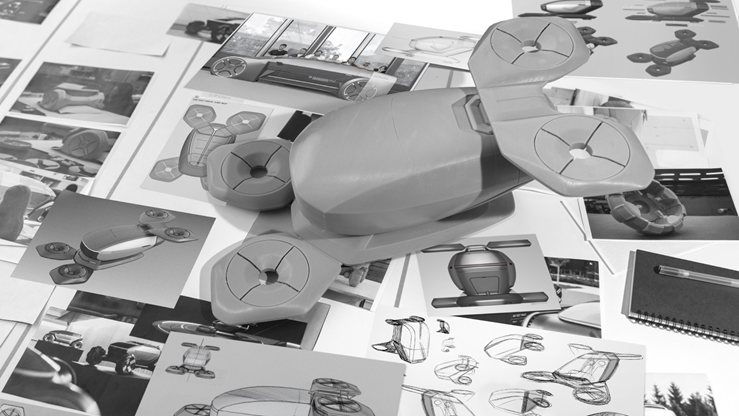
From sketchpad to sky: GM Design explored the flying vehicle concept for Test Track.
Can you talk about the flying car effect?
The Flying car is a fun surprise and a perfect way to get guests dreaming about the future. We worked with Disney to create a full-sized model that brings it all to life in front of your eyes.
When you enter the “Progress City” projection dome sequence, you see this massive future skyline with the flying vehicle at the center. You’re transported into a world of tomorrow.
We took the innovations from Cadillac’s VTOL concept, then re-imagined the design to fit into the family of vehicle concepts from earlier in the ride so that guests can see a clear line from today into an exciting future of mobility in the skies.
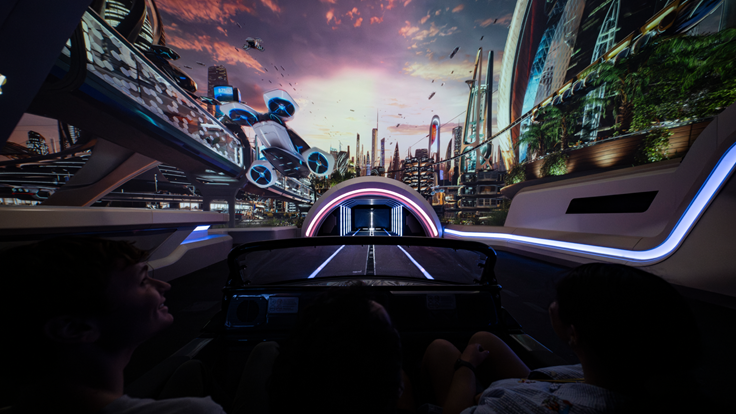
In the “Progress City” finale, guests enter a futuristic cityscape where GM Design’s vehicle concepts take off.
How does GM’s commitment to safety and innovation show up in the ride?
It shapes the entire experience. Each part of Test Track embodies those values.
The pre-show video places guests inside a futuristic GM Research & Development lab. There’s wind tunnels, suspension testing, and imagined safety technologies of tomorrow. That's meant to show how vehicles might be engineered in the future.
It all builds to the ride itself, where guests see innovations like inductive charging, autonomy and LiDAR first hand.
What does this cross-company collaboration mean to you as a designer?
It symbolizes what happens when Disney’s storytelling skills and GM’s real-world innovation come together to move people. Their magic and our engineering create something imaginative, grounded, and relatable.
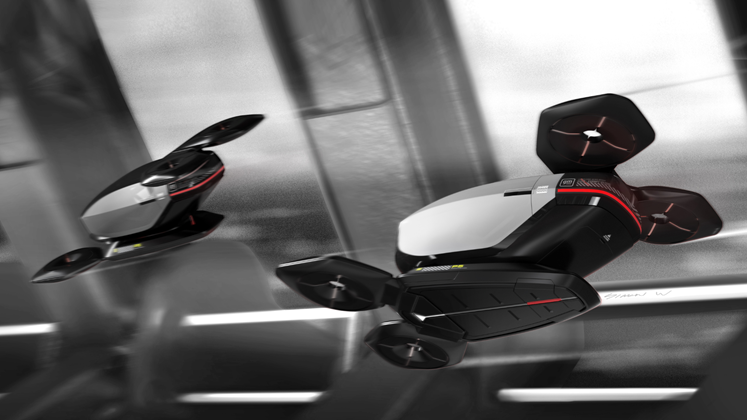
The flying vehicle brings a new lift to Test Track’s vision of mobility.
How has Test Track reflected GM’s legacy over the years?
Each version reflects its own era of innovation.
Test Track presented by General Motors (1998) focused on crash testing and safety. Test Track presented by Chevrolet (2012) highlighted evolving design and sculpted surfaces.
The reimagined Test Track looks toward automated driving, zero emissions, and advanced safety technologies, showing guests what’s possible in the future of mobility.
What qualities help designers thrive at GM?
Collaboration is the heart of our design culture.
We have a wide range of experts joining together across many disciplines. When we listen to each other and work as one team., That’s when GM Design truly shines.
For Test Track, we brought together exterior designers from different studios to consult on the right personas for each of the concepts. We worked together to nail the proportions, stance and presence, and then built a brand agnostic form vocabulary so that concepts as diverse as race and adventure still felt like a part of the same family.
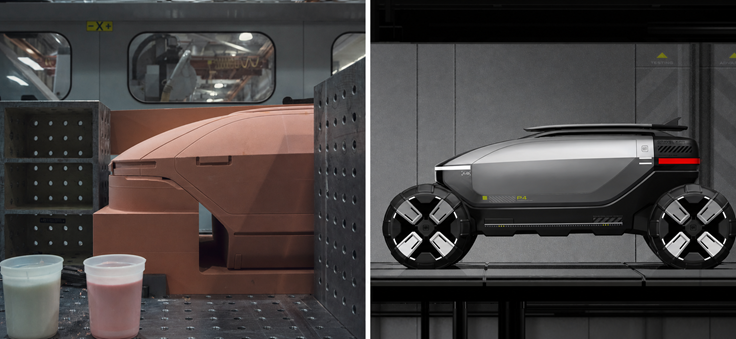
GM Design used clay sculpting to refine the proportions and surfaces behind the attraction’s vehicle concepts.
Which GM Behaviors guided this project?
Think Customer and Innovate Now.
We designed every moment around how guests would feel, and we wanted the attraction to reflect the true scope of innovation happening across GM.
What's your favorite part of the ride?
The “Garage of the Future” scene. After seeing the scale models in the queue, suddenly seeing yourself inside a full-size future vehicle is a powerful moment. Our team spent countless hours collaborating with Imagineers prototyping this effect and fine tuning each vehicle to make the experience completely immersive.
When we designed the concepts, we got to work closely with the brand studios to help imagine proportions and silhouettes that are undeniably futuristic and give riders a chance to look into the future with us.
Any fun trivia for the fans out there?
There are a bunch of Easter eggs in the scale models throughout the queue.
Look closely, and you’ll find these little numerical sequences. These are actually important dates for members of our GM Design team. A few even reference the coordinates of the GM Design Dome.
It was our way of putting a little extra love into the experience.
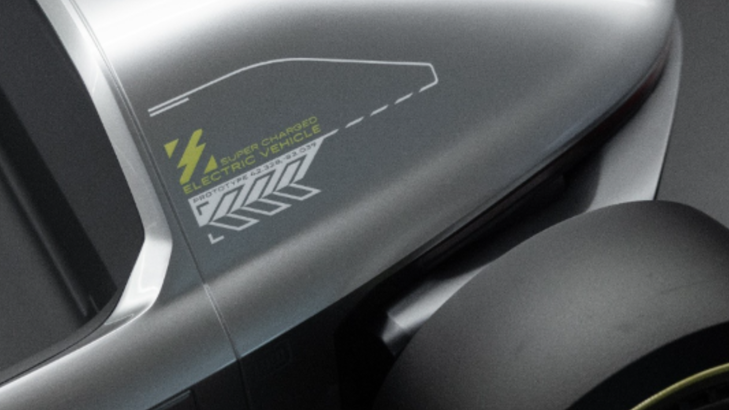
Close-up details highlight the precision behind GM Design’s vehicle concepts for Test Track.
What do you hope EPCOT guests, especially future designers, take away?
I hope guests walk away feeling optimistic about the future of mobility and inspired to imagine their own role in shaping it.
When I rode the original Test Track as a 10 year-old, I went home and immediately started sketching cars and dreaming about what transportation could be. It genuinely changed the course of my life.
I tried to bring that same energy into the reimagined Test Track. If this version helps even a few kids — or kids at heart — to dream a little bigger about the future, then we’ve done our job.
If you have a creative imagination, there are so many roles here at GM Design to explore.
Is Test Track what inspired you to join GM?
Absolutely.
I always loved art and design, but imagining the future of transportation really clicked for me after experiencing Test Track for the first time. And even then, GM felt like the destination for me.
That childhood vacation to EPCOT paved the way for the future of my dreams.
Now, I get to pass that inspiration on to someone else.
Inspired to design what comes next? Explore open roles with GM Creative Design.


