


Driven to Serve highlights the veterans and military-connected employees who build successful careers at GM with purpose and impact.
Rain Thompson used to save lives at sea. Now, she helps change people’s lives on land.
At just 18 years old, Rain served aboard the USS Abraham Lincoln as a firefighter and EMT. Responding to emergencies at all hours taught her what it means to stay steady under pressure. The Navy required discipline and trust in others. That foundation still guides how she serves and supports people today.
At GM, Rain recruits engineers and top technical talent who are making some of the biggest decisions of their lives. Having rebuilt her own path after the Navy, she understands the courage it takes to begin again. She’s driven to help others recognize their strength, and step into their next chapter with purpose — and a newfound sense of confidence.
See how Rain’s journey shaped her belief that everyone is capable of more than they think, no matter where they’re at in life.
You joined the Navy at 18. What did that experience demand of you, and how did it shape you?
I had to grow up fast. On the USS Abraham Lincoln, I was surrounded by people from completely different backgrounds. I learned very quickly that you cannot succeed alone. You have to adapt and rely on each other.
As a firefighter and EMT on the ship, I saw what that really meant in action.
I had to respond to emergencies in the middle of the night. I worked beside my team to ensure rapid response and efficiency because there was no room for error. I was exhausted — but I showed up anyway. That experience showed me what I can do and how much strength comes from trusting the people around me to help save the lives in need.
That kind of teamwork stays with me, even now.
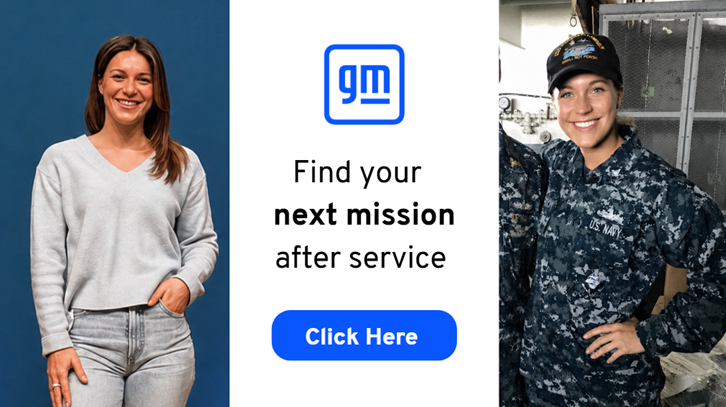
Rain looks back on her time in the Navy as one of the most challenging times of her life, and one that she met with a smile.
What did it feel like stepping out of the military and starting over as a civilian?
Like most veterans, I felt behind in life. My peers were stepping into their first big corporate jobs. Meanwhile, I was going back to school and working full time. I felt lost. I didn’t know what direction to take.
In the military, you don’t always get guidance on how to translate your hard-earned experience into a civilian resume format. You don’t have internships or advisors that help you navigate that life change so you really have to figure it all out on your own.
When did you find out recruiting could be another way to serve?
Honestly, practically right away.
I first joined agency recruiting because I was looking for connection and community — a sense of belonging, really. But I soon discovered that you can truly change someone’s life through this line of work. You’re helping people provide for their families, relocate their lives, and step into new elements of their career. That’s meaningful work.
I’ve never seen candidates as numbers or KPIs. To me, they’re human beings. If you focus on the human element, everything else falls into place.
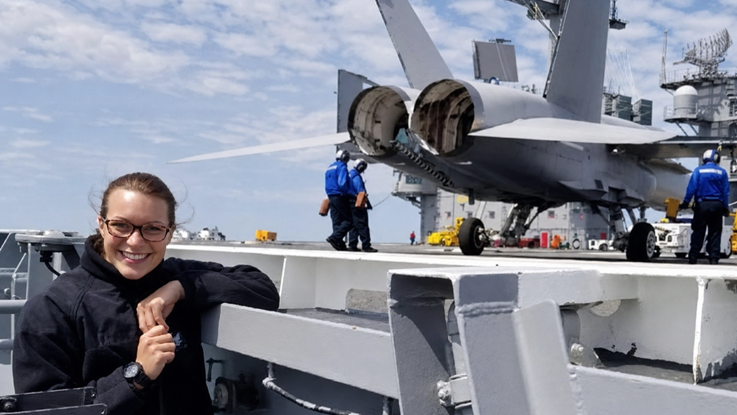
Rain aboard the USS Abraham Lincoln during her first sea trial in 2017, preparing for a chapter that would shape her strength and perspective.
How did the Navy, your career, and motherhood shape the kind of leader you are today?
Leadership looked very different in the Navy. In recruiting, I saw leadership as a sort of partnership. You work closely with hiring managers, you solve problems together, and you support each other.
Having a child changed the way I see everything. It slowed me down in the best way. I think more carefully about how I lead and how I show compassion and empathy for my candidates. I’m thankful to work somewhere that understands that being a parent highlights your greatest attributes, and it’s not something that you should need to separate from your career.
You recruited engineers at Apple and Amazon. What did that experience teach you about how to identify and attract top tech talent?
Working at Apple and Amazon raised my expectations. I saw how intentional you have to be when you are recruiting highly technical people. They want substance. They want clarity. They want to know their work will matter.
At GM, I found that same commitment to recruit for strong engineers. What surprised me was how natural it felt. It is ambitious, but it is human. I’ve noticed how enjoyable it is to recruit for a company when you share a strong passion for their mission.
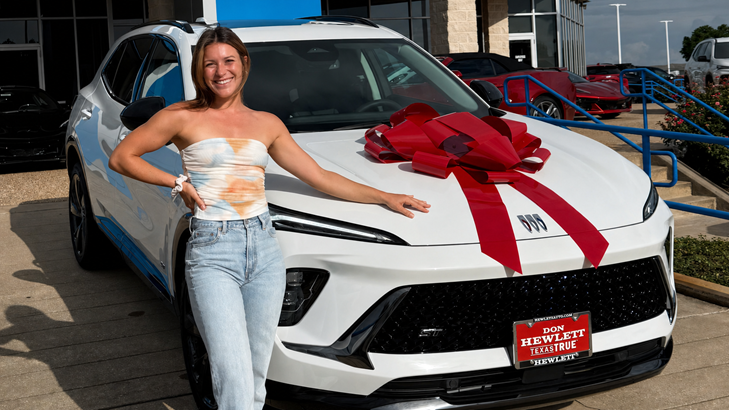
Rain with her Buick Envision in Georgetown, Texas, purchased during her first weekend with GM in July 2025.
How did you know that GM was the right place for you?
Within the first ten minutes, of my first interview — I felt it. The conversations were thoughtful. People were curious. They were listening and they showed unmatched kindness and respect.
GM is a large company, but it doesn’t feel impersonal. I felt connected. The work is ambitious, but everyone is down-to-earth. I could see that people build long careers here because they feel appreciated.
That mattered a lot to me.
What do engineers realize once they see what’s actually happening inside GM?
Just how big all the tech work going on here really is.
When I visited a robotics lab early on, I was blown away. The AI, cybersecurity, and software-defined vehicles are incredible. These cars really are computers on wheels.
When engineers understand how much their work could influence safety and the future of transportation, something clicks. You can see it in their reaction. I love that moment.
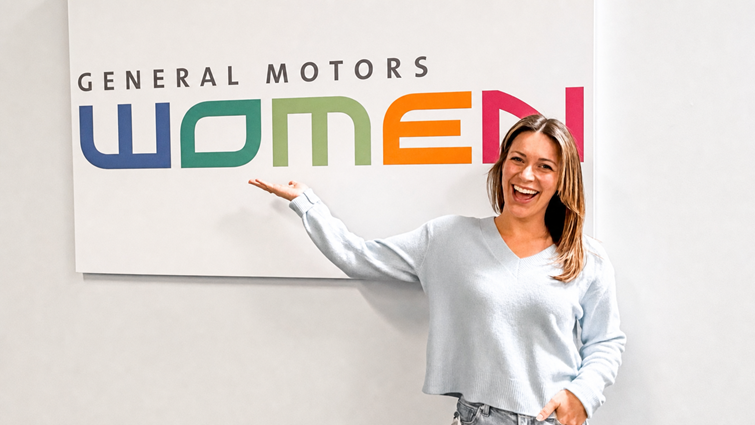
Rain at GM’s Innovation Center in Austin, Texas, where she helps connect technical talent with meaningful opportunities.
What’s the “secret” to attracting top tech talent today?
It comes down to trust.
You have to understand where candidates are coming from — what they’re truly looking for. If you build trust, they’ll tell you what’s really driving their search. That’s how you connect them to the right opportunity.
And honestly, it’s easy to speak passionately about GM. When I talk about the culture and the mission, I mean it.
What’s your advice for Veterans who may feel lost in their transition back to civilian life?
I wish I would have had more help when I was going through that stage. That’s why I try to be available now, whether someone needs resume guidance, interview prep, or just a conversation I will always make myself available.
A lot of veterans are used to handling everything on their own. We’re trained to be strong, to push through, to figure it out. But transitioning out of the military is a huge shift. It’s okay to feel unsure. It’s okay to not have all the answers right away.
Finding one or two people who’ve been through it can completely change your direction.
Ask for help. You don’t have to figure it out alone.
Discover more about how veterans and military-connected employees at GM turn service into impact.
- Driven to Serve: Brett Munster’s Marine confidence keeps GM moving
- Driven to Serve: How Alex Reba supports two missions at once
- Driven to Serve: How John Gillmer champions veterans and data at GM
- Driven to Serve: Brandon Gifford still owns the mission at GM
- Shifting Gears: Veterans transition from military service to vehicle service


