


On the Line highlights the unseen work of GM Controls Engineers — the ideas, teamwork and quick thinking that helps keep production on track.
Some people discover engineering in a classroom. Others discover it by following a trail of curiosity wherever it leads.
Controls Engineer Malachi Smith falls firmly into the latter. Today, he’s part of the team that keeps GM’s Lansing Delta Township (LTDT) Assembly Plant running smoothly, tackling challenges that require equal parts technical skill and teamwork.
But the mindset that makes him effective started long before his road to GM began.
In this interview, Malachi talks about what shaped his approach to problem-solving, what he values in the plant environment, and why he sees automation as an opportunity for everyone.
Where did your interest in automation and control systems begin?
Honestly, it started way before I knew what “automation” even meant. I grew up surrounded by old computers my dad brought home from people who didn’t want them anymore.
My brothers and I would tear them apart, see what was inside, and try to piece together something that could actually run a game.
I got into programming the same way, mostly through Minecraft believe it or not. I made mods, learned Java, set up Linux servers because our computers were too slow for Windows…it all snowballed from curiosity.
So when I came across Controls Engineering, it felt like the grown-up version of everything I’d been doing for fun.
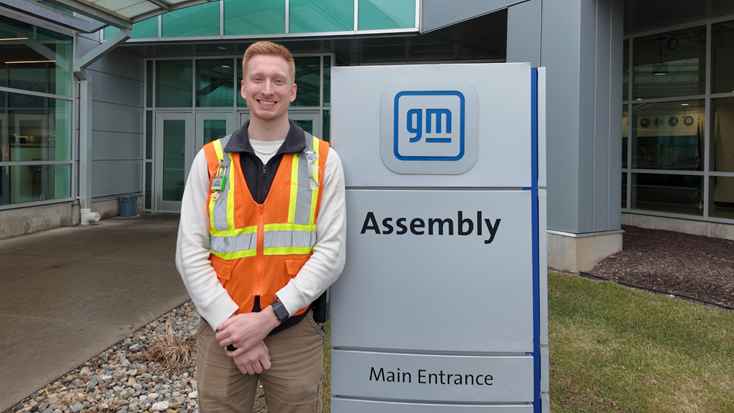
Controls Engineer Malachi Smith outside GM’s Lansing Delta Township Assembly Plant.
You started here as part of GM’s co-op program, serving in multiple rotations. How did this experience help you become a Controls Engineer?
I was 18. I had just graduated high school, and a month later I was walking into Lansing Grand River Assembly Plant (LGR) as a Supplier Quality co-op. I knew nothing, basically.
Those early rotations taught me how a plant works on every level: quality, maintenance, controls, you name it. I saw the plant from almost every angle. When I became a full-time employee, I already understood the rhythm of the place.
Becoming a Controls Engineer felt like I had just come back from a long weekend. The work was familiar, and I was ready. It was just “official” now.
What felt different once you were full-time?
The responsibility.
As a co-op, your world centers around one small part of a larger project. As a full-time engineer, you own the entire project — from the first idea, to the day it’s running on the line.
And during breakdowns, you’re the one everyone looks to. You’re directing traffic, making decisions, and keeping things safe and moving.
It’s more pressure, but it’s the kind of pressure that makes you grow.
What project are you especially proud of?
One that stands out was in our final alignment pits. We had these old laser barcode scanners that read the windshield labels, and they missed scans consistently. Operators were having to hand scan backups, which killed cycle time.
After pulling the data, I realized how big the issue actually was, and proposed switching to newer camera-based scanners. I updated the wiring, the logic, everything.
Across all four pits, the update saved the plant — and GM — more than $4.6 million a year in downtime.
It was one of those “small fix, big impact” moments. And it all came from listening to the people using the equipment every day.
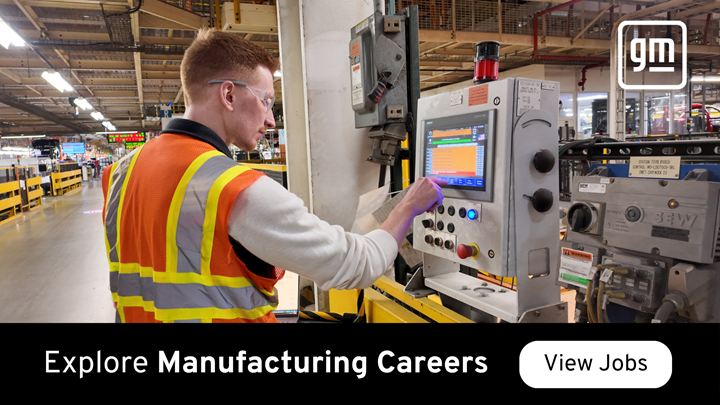
Controls Engineers help solve real manufacturing challenges every day across GM plants. See where a manufacturing career at GM can take you.
Speaking of which, where do the best ideas on the plant floor usually come from?
The people who touch the equipment hundreds of times a day.
Team members and electricians know every quirk of a station. They’re the first to notice when something feels off or doesn’t make sense.
Our job in controls is to take their insight, add the technical piece, and turn it into a real solution. You could say innovation here is definitely a team sport.
How do you stay up to speed on new automation tech?
GM’s Vehicle Systems Teams are great for that. They work globally, so they’re always introducing new standards, new tech, and applying lessons learned from other plants.
A lot of the ideas we use, like those camera-based scanners, come from staying connected to this global pipeline.
What makes Lansing Delta Township Assembly special to you?
The teamwork.
I’ve been here through many industry developments and a major vehicle launch. What stands out over time is how well everyone — union, salary, trades, engineering — works together.
We recently ranked #1 in GM for our C1YX-2 launch (Traverse and Acadia), and that wasn’t just luck. That was people truly pulling together. Being part of the team that helped stand up the third shift was a big point of pride.
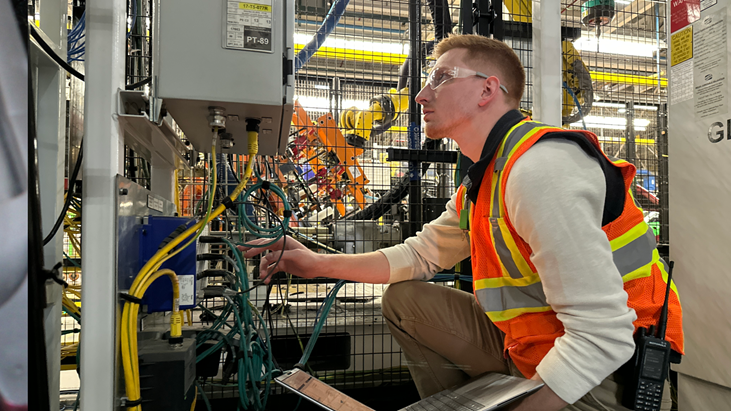
On the plant floor at LTDT Assembly, Smith helps solve the day-to-day challenges that keep production moving.
How do the engineering and production teams work together when something unexpected comes up?
Production usually flags the issue first since they’re the closest to the work.
A great example is when we started having issues with a rain-sensing humidity sensor during installation. Production told us what they were seeing, trades helped narrow it down, and engineering added more error-proofing scanners to fix it.
Everyone brings a piece of the puzzle. That collaboration makes the solution simple, if not streamlined.
What advice would you give students or new grads thinking about engineering careers at GM?
Do an internship or co-op. Seriously.
Even one rotation gives you a huge head start. You’ll get real experience, with real equipment, and take on real responsibility. Plus, you’ll figure out quickly whether you love the plant environment or not.
And if you do want a full-time role later, that experience makes the transition so much smoother. So go for it.
Which GM Employee Behavior resonates with you most?
Lead as One Team.
Controls, production, trades teams all depend on each other. When I’m leading a breakdown, communication and collaboration make all the difference. If everyone’s aligned, things run smoother and safer.
That behavior isn’t just a slogan; it’s how the plant works every single day.
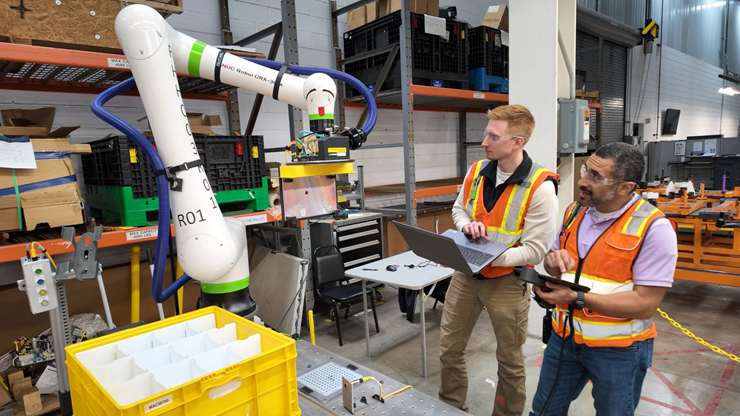
Controls Engineer Malachi Smith and Manufacturing Engineer Lead George Maher review new automation equipment at LTDT Assembly.
Where do you see automation heading in the next few years?
There will be more of it, and that’s a good thing.
A lot of the automation coming in is focused on making work safer and less physically demanding for operators. Lifting heavy parts, repetitive motions, tasks that strain the body…robots and future co-bots can take that load off people.
That’s where the real impact is.
What do you love most about the work you do at GM?
I love solving problems. That’s really what it comes down to.
Every day there’s something new to figure out. Something that can make the line safer, faster, or more reliable.
And when you see a vehicle roll off the line knowing you helped make it happen? That’s a pretty great feeling.
It makes the work feel meaningful.
Explore more stories from GM Manufacturing


