


Leafcutter bees are easy to miss.
They buzz through the flowers near GM’s Grand Rapids Operations plant. From a distance, the machinery gets your attention first. Up close, there’s pollen gathered beneath the bees’ abdomens.
Nearby, one of the leaves has a neat half-moon missing from its edge. It looks like something took a bite out of it. But the missing piece may be headed somewhere else: into a female leafcutter’s nest.
GM’s Environmental engineer Alex Windle spends a lot of time noticing things like that.
Her job at Grand Rapids Operations covers everything from stormwater and regulated waste to chemical safety and risk mitigation, often working across plant teams.
“Compliance is the work we have to do, but biodiversity is the work that we get to do,” Alex says.
Just outside the plant, she saw a place to start.
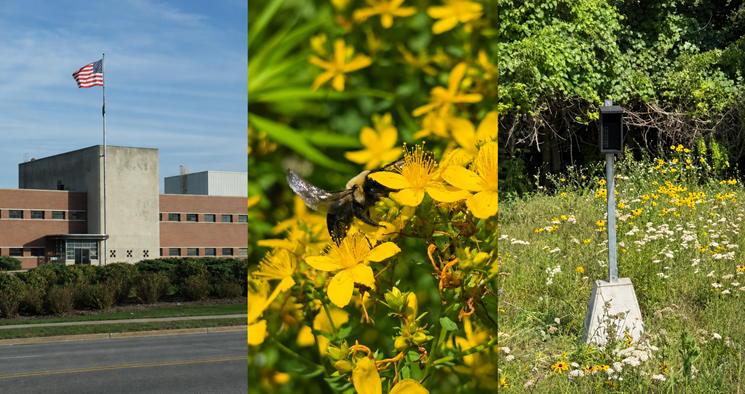
Take a closer look at Grand Rapids Operations and you’ll find more than machinery: a leafcutter bee, a bee nesting box, and a meadow doing something new.
What else could this land do?
About 2.5 acres were mostly covered in non-native grasses. Keeping it that way meant weekly mowing, watering during dry spells and herbicide applications. Alex says that routine likely would have continued if the habitat project hadn’t moved forward.
What stood out to Alex was how much work the 2.5 acres required compared with what they offered as habitat. In her words, it was “high effort, low ecological value.”
In 2024, Grand Rapids Operations began turning the 2.5 acres into a native pollinator meadow with local partner Native Edge. The seed mix was chosen so different plants would bloom across the season, and stems and seed heads could stay standing instead of being cleared away.
At first, the meadow didn’t look like much.
Alex says a new native meadow can look sparse or unfinished while the plants get established. It fills in over the seasons, and things you might tidy up in a conventional lawn, like standing stems and seed heads, can be useful to insects and other wildlife.
What else was hiding in plain sight?
Working on the meadow changed how she looked at the rest of the property.
Drainage areas, low spots and hard-to-mow corners started catching her attention. So did the places where water collects after rain. Instead of seeing only hard-to-maintain areas, she started wondering what else those spaces could be used for.
That was the bigger realization for Alex: the land didn’t have to just sit there and be maintained. A meadow could give it another job, from providing habitat to helping the team learn more about stormwater, biodiversity and how employees use the space. Some of those benefits will take time to measure.
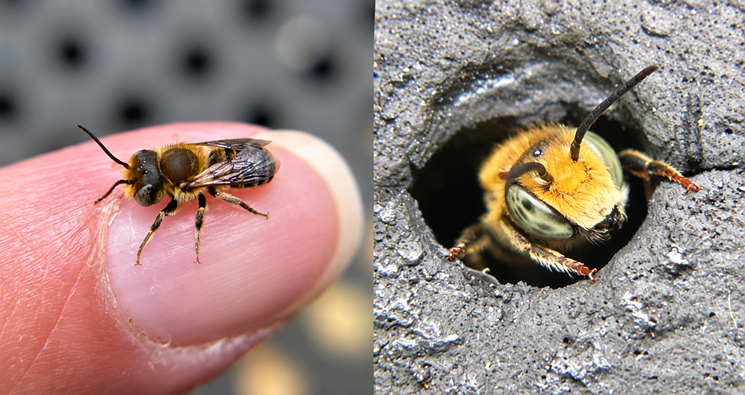
The bee is tiny. The evidence is not. Pollen, missing pieces of leaves and a nest built one small chamber at a time shows what can happen when GM asks more of the land around its operations.
Why leafcutter bees?
The meadow at Grand Rapids spent its first two years getting established, Then, in summer 2026, Alex had another idea. What about bees? Leafcutter bees, to be exact.
They weren’t part of the original meadow plan. Alex chose them partly for their temperament: they’re gentle, solitary and well suited to a busy manufacturing site. They also add another layer of function by pollinating flowering plants and using vegetation and nesting materials around them to complete their life cycle. The more Alex learned about them, the more she wanted them there. She figured everyone else would be just as excited.
“That is definitely not what happened.”
People had questions. What if someone got stung? What about allergies? Where would the bees go? Who would look after them?
Alex says those questions made the team slow down and think through how the bees would fit into an active manufacturing site. Instead of simply introducing them, they started with a small, carefully communicated pilot.
Making the idea work
So she started talking it through with them.
She held lunch-and-learns, walked the plant floor, shared information about solitary bee behavior and invited employees to help monitor the meadow.
Once people understood that leafcutters don’t live in large colonies and generally won’t sting unless they’re grabbed or stepped on, the concerns became easier to talk through. Alex learned that making the idea work meant listening, not just explaining.
“I think it’s really easy for me to be a cheerleader because I love my job,” she says. “Sometimes you have to translate it and make it feel fun. Sometimes you have to make it feel more human and worth caring about.”
For Alex, getting people on board matters just as much as getting the plan right.
“You can have the best permit, the best spill plan or design in the world. But if people don’t feel connected to it, it just lives on paper.”
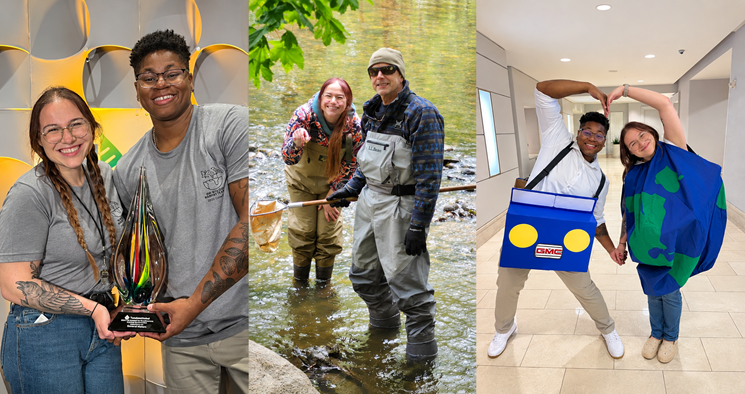
For Alex, environmental engineering means asking better questions, cheering on biodiversity, and bringing others along with her.
How it works here
Plant Director Juan Carlos Aldana looks at it from the day-to-day side: how does the habitat fit with everything else happening at Grand Rapids Operations?
“At our facility, we apply the same care and discipline to our habitat work that we bring to building products for our customers,” Aldana said. “Making room for native plants and pollinators alongside our daily manufacturing operations takes planning, teamwork, and commitment. It is important work for the environment and strengthens our community.”
The meadow is part of a working manufacturing site. But Grand Rapids Operations is also part of a neighborhood, near homes and across from a large park system. Alex sees the meadow as part of that larger landscape, not just something inside the property line. She says employees across the site have started spending more time outside, sharing photos and observations and looking more closely at what is growing there.
Following the buzz
There’s still more to learn about what the meadow will do over time. But Alex says one change is already easy to see: people are paying attention.
She says she’s seen a clear increase in plant diversity since the meadow was established. Employees are spending more time outside, looking for pollinators, sharing what they find and even competing to identify species using iNaturalist.
She compares the discovery process to “Pokémon, but in real life.”
A bee moves through the flowers beside the factory. Nearby, a half-moon is missing from a leaf, soon to line one of the brood cells Alex calls “little leaf sleeping bags,” where young leafcutters can overwinter.
“Once you start looking closely,” Alex says, “you keep unlocking these new species that you never noticed.”
See sustainability at work
Alex Windle’s pollinator meadow is one example of environmental stewardship taking root across GM. Explore GM’s Environment & Sustainability work and read how another plant team is creating habitat for pollinators.
Explore Environment & Sustainability at GM
Related stories:
- Across America, GM’s impact starts with people — features environmental lead Sherri Zeller and pollinator garden and insect-hotel projects at GM Toledo.
- Off the clock: Paul Messing, battery buff and birder — a GM engineer’s connection to birding and wildlife habitats at GM facilities.


