


Keely Bosn's first job in the Navy came with a $42 million budget and a twenty-person supply and logistics team. Fresh out of Officer Candidate School, she was responsible for the hovercraft vessels that move Marines from ship to shore. Then someone asked her to run a barracks renovation on the side.
It wasn't even her primary job. She wasn't a construction officer. Keely remembers the wave of pure overwhelm: get a renovation off the ground, on top of her real assignment.
But she got it done. What stuck with her wasn't the paperwork. It was discovering the level of responsibility handed to junior officers in the military, often before they feel ready for it.
That discovery carried her through seven years as a Navy Supply Corps logistics officer. She deployed twice to the Middle East, supporting Naval Special Warfare operations. There, she managed multimillion-dollar budgets and mission-critical equipment for SEAL teams.
Long before that, Keely’s true career journey began on a dirt track. That’s where she learned that the parts nobody sees are what make the performance everyone does see possible. Today, as Cadillac Racing Program Manager for the V-Series.R endurance racing program, she brings both lessons to work that helps Cadillac compete around the world.
Find out how Keely’s story can help veterans imagine what happens after service, in her own words.
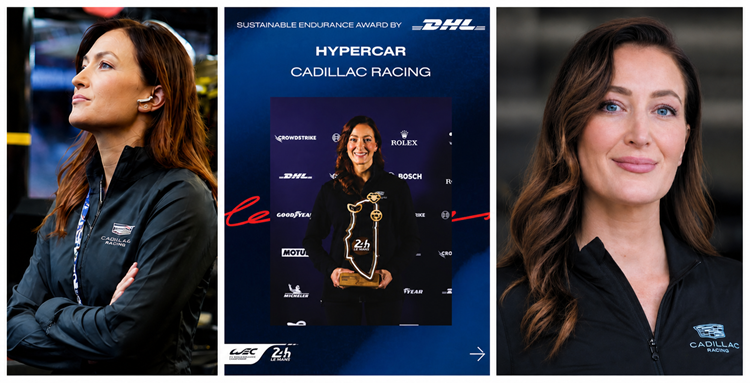
From left to right: Keely Bosn with Cadillac Racing in São Paulo, Brazil; at the Sustainable Endurance Award ceremony in Le Mans, France; and in Spa, Belgium during the 2026 racing season.
What first got you hooked on racing?
I grew up at the track. My dad drag raced, so I was there even as an infant. By age 12, I was racing mini-sprints myself, all through high school. It's more of a lifestyle than a hobby. I was hooked on the feeling of winning and going fast—but going fast takes a lot of effort nobody sees.
You interned with Corvette Racing at Kettering. Did you think you'd end up back in professional racing?
The short answer is no. At the time, I felt like I'd won the lottery. I was a big Corvette fan, and I'd worked up the guts to just ask people what it took to get a job in motorsports. I loved it, but after the detour into the military, I never thought I'd find a clear path back. I'm glad everything curved around this way and gave me a path to professional racing.
What led you to the Navy, and specifically into the Supply Corps?
I wanted to do something that mattered, outside my comfort zone. I actually joined hoping to be a pilot, and was accepted, but medical reasons forced a last-minute pivot in the middle of Officer Candidate School.
The Supply Corps wasn't as well known, but it fit my background: engineering, plus a business minor. I liked owning the budget, the supplies, supporting the people on the ground who make the mission possible.
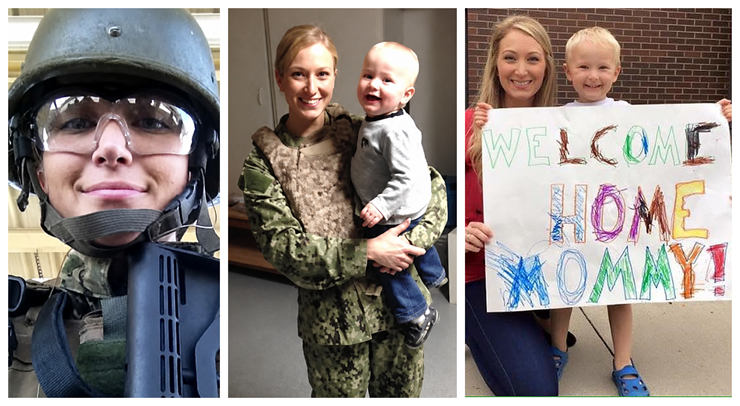
From left to right: Keely Bosn at U.S. Navy Expeditionary Combat Training in Gulfport, Mississippi, in 2012; at home in Oceanside, California, before deployment; and with her son in Ann Arbor, Michigan, after returning from her second Middle East deployment in 2015.
What did being "mission-ready" actually mean when supporting SEAL teams?
If the phone rings at two in the morning, you're not scrambling. The equipment's already maintained and funded, and everyone knows their role. The margin for error is basically zero. It comes down to trust: your people knowing you'll be ready when the mission comes.
How did that responsibility shape the way you lead?
It taught me to lead by making other people successful. In an ideal world, if my team does the job well, everybody else looks prepared, and that's how it should be. It pushed me to be proactive, to spot weak areas before they became issues, and to own the outcome, not just my piece of it. I focus a lot of energy on clearing roadblocks for my people and giving them honest, transparent information. When something does slip, I own that too.
So what does a day running Cadillac's endurance racing effort actually look like?
I’m responsible for helping make sure Cadillac’s sports car programs are ready to compete, week in and week out, with no on or off season. That means aligning with leadership on budgets and goals, coordinating with our three partner teams competing in the International Motor Sports Association (IMSA), and the FIA World Endurance Championship (WEC), and working with the suppliers and partners who keep them stocked with parts. My job is connecting all the pieces, so by race weekend, the only focus left is performance, how we make the car go faster.
How is managing a global endurance racing program like running expeditionary logistics?
They're strangely similar, probably more than you'd think. In both, you're moving high-value, specialized equipment around the world on tight timelines, with a lot on the line if you get it wrong. Shipping race cars to another continent feels like planning a deployment: customs, tariffs, transport risk, backup plans. And if the logistics are shaky, it doesn't matter how talented your people are. You won't execute trackside without what you need, in working order, when you need it.

Your military experience can lead somewhere unexpected. Discover career opportunities for veterans at GM.
Find your next mission at GM
Keely’s story shows that the skills you build in service can take you somewhere unexpected. Explore GM’s Military Community and meet other veterans finding their next mission here.
- Explore careers for veterans at GM
- Read Driven to Serve: How John Gillmer Champions Veterans and Data at GM — published December 2025.
- Read Driven to Serve: Brett Munster’s Marine Confidence Keeps GM Moving — published April 2026.


